
5 Reasons Education Is the Most Powerful Gift You Can Give

Thomas Minieri • June 3, 2025

In the lush hills and vibrant towns of Jamaica, where reggae rhythms echo through the streets and the island sun casts its golden glow, there exists a quieter, more urgent reality: thousands of children are growing up without access to a stable education.

In too many communities, children walk miles to reach overcrowded, under-resourced classrooms. Others are left behind altogether—trapped not by a lack of potential, but by a lack of opportunity. For these children, the most powerful gift anyone can offer isn’t just food or clothing. It’s not even temporary shelter or healthcare, though those needs matter. The most powerful, transformative gift is education.

Here are five reasons why education is the most lasting, life-changing gift you can give—especially in places like Jamaica—and how your support can spark a ripple effect that lasts for generations.


1. Education Breaks the Cycle of Poverty

Poverty isn’t just a lack of money—it’s a system of limitations. It limits what children believe is possible for their future. It limits their access to jobs, resources, and dignity.

But education flips the script.

A quality education equips a child with more than just literacy and math. It gives them the tools to think critically, dream boldly, and pursue a future beyond their current circumstances. According to UNESCO, each additional year of schooling can increase a person’s income by up to 10%. That impact is multiplied in communities where opportunities are scarce.

In rural and impoverished Jamaican communities, education is the most realistic and effective long-term solution to poverty. When a child gains access to a proper school, they gain a foundation—one that empowers them to lift not just themselves, but their families, out of generational poverty.


2. It Protects Vulnerable Children

When children aren’t in school, they are more vulnerable to exploitation, abuse, and unsafe environments. In some areas of Jamaica, where tourism flourishes but economic inequality persists, many children fall prey to trafficking, child labor, or early pregnancy—all of which derail their future before it even begins.

Education acts as a shield.

A school is more than a building—it’s a safe haven. A place where children are supervised, mentored, and taught to believe in their self-worth. Schools become a second home, filled with role models, structure, and hope.

By supporting the construction of safe, local schools in Jamaica, you are helping protect children from the dangers of the street—and replacing those dangers with dignity, structure, and opportunity.


3. It Empowers Girls and Strengthens Communities

In many underdeveloped areas, including rural parts of Jamaica, girls face unique challenges in accessing education. Cultural expectations, domestic duties, and poverty often keep them at home. Yet when girls are educated, everything changes.

Educated girls are:

  • Less likely to marry young
  • More likely to earn an income
  • More likely to invest in their families’ health and education

When girls go to school, entire communities thrive. Educated women become community leaders, advocates, and stabilizers. They start businesses, raise healthier children, and influence generations.

A gift to education is a gift to gender equity—and it’s one of the smartest investments you can make if you want to transform a region from the inside out.


4. It Builds Peace and Reduces Crime

In areas of high unemployment and poverty, crime rates naturally rise. Young people without access to education are statistically more likely to engage in gangs or criminal behavior—not out of desire, but out of survival.

In contrast, education instills values like cooperation, responsibility, and hope. It provides a roadmap out of desperation.

Studies from the World Bank show a direct correlation between education access and reduced violence. In Jamaica, where communities are often plagued by unemployment and instability, a new school doesn’t just help students—it stabilizes neighborhoods. It signals to everyone that change is possible. That a better future is being built, brick by brick.


5. It Leaves a Legacy That Outlives You

The most powerful gifts are the ones that keep giving—long after we’re gone. Education is one of those gifts.

When you give toward building a school in Jamaica, you’re not just helping a child today. You’re shaping the trajectory of their entire life. You’re helping them learn to read, write, think, solve problems, and one day—teach others. You’re sowing seeds of hope that may grow into businesses, churches, clinics, or nonprofits.

Your gift creates ripple effects that will still be felt decades from now.

Every classroom is a launchpad. Every student, a future leader. Every donation, a legacy.


🎓 The Mission of Christos Ministries

At Christos Ministries, we are on a mission to change the story for children in underdeveloped countries—starting with Jamaica. We raise funds to construct educational facilities in communities where children need them most. But we don’t stop at buildings. We also provide ongoing financial support to ensure those facilities thrive long-term.

Our goal is simple: every child deserves a future worth dreaming about. And we believe the best way to unlock that future is through access to safe, consistent, Christ-centered education.


🙌 How You Can Help

The need is urgent. Right now, there are children in Jamaica who want to learn but have no school to attend. They are bright, curious, full of potential—but waiting. You can be the answer to their prayer.


👉 Your donation today will help us build the next school. It will provide desks, supplies, teachers, and the foundation for a future that doesn’t yet exist.


We invite you to give generously—because the most powerful gift you can give isn’t just a donation. It’s a doorway to a new life.

🟡 Donate Now – Give the Gift of Education
Together, let’s build something that will stand the test of time.
By Thomas Minieri December 8, 2025
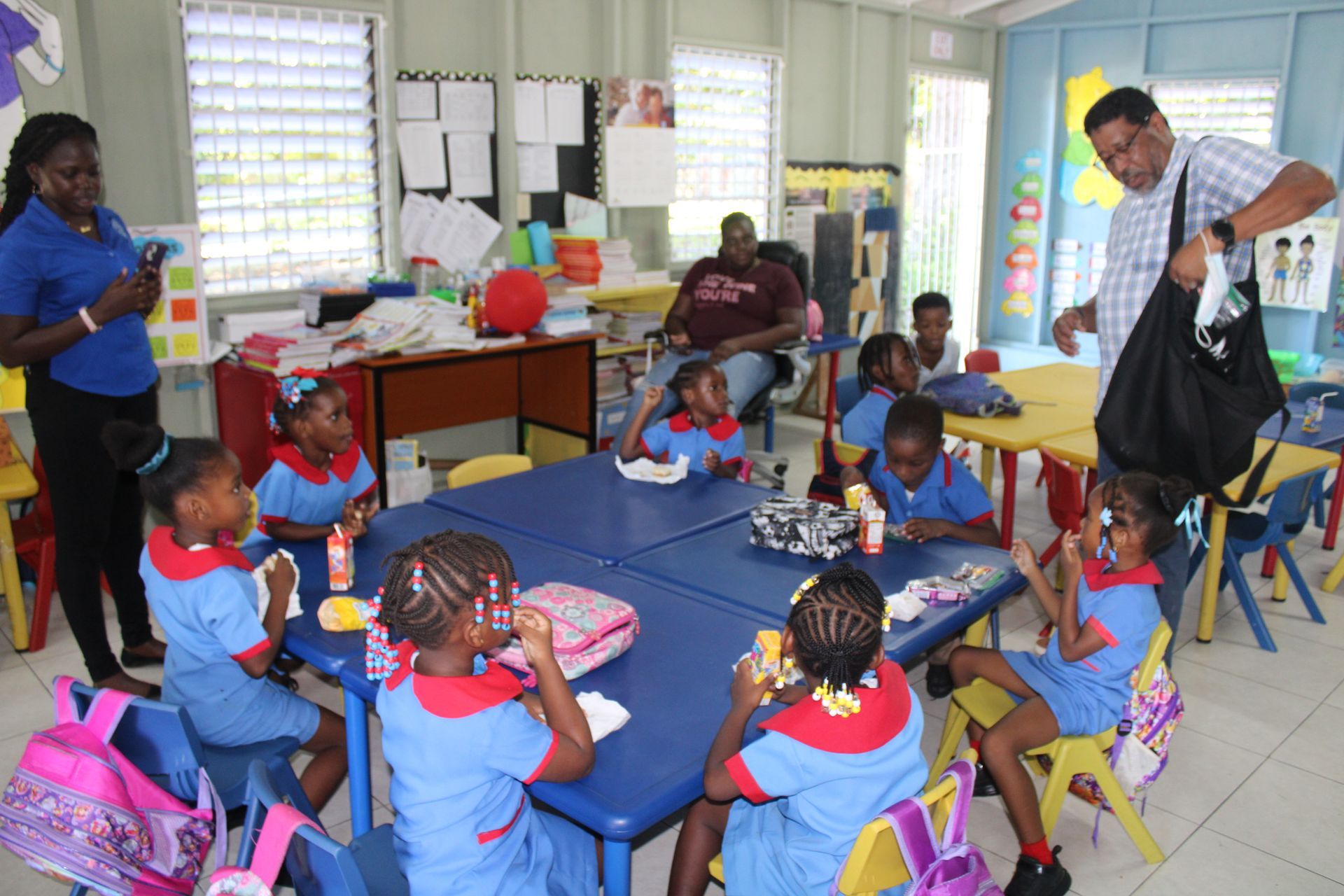
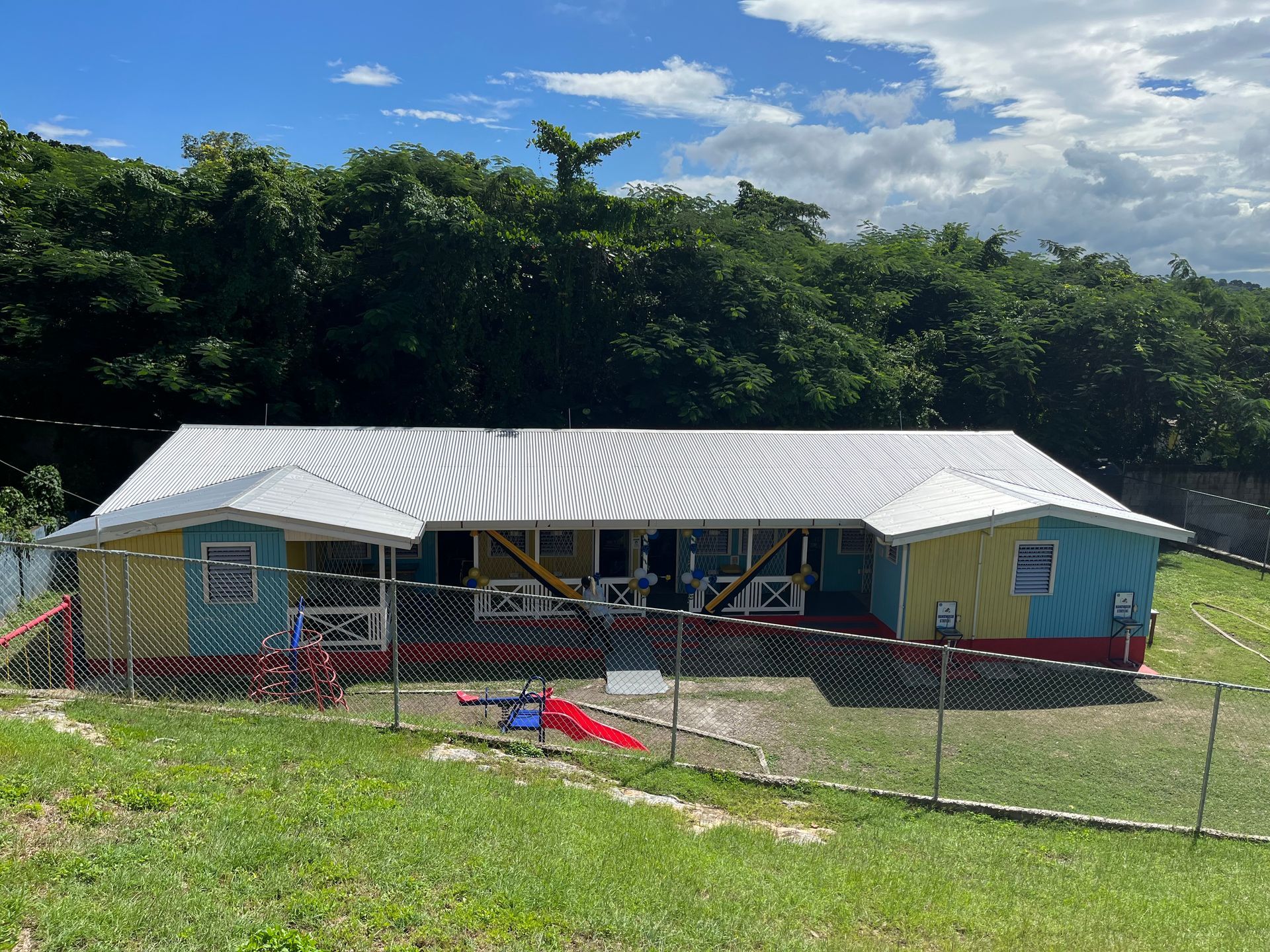
Tucked away in a community once plagued by violence and crime, Glendevon Primary & Infant School in St. James, Jamaica, is quietly rewriting its narrative. Amid challenging social circumstances, the school’s recent academic and community-driven successes signal not only resilience — but a powerful model for what education can achieve even “against the odds.” A Sweep in Maths: Demonstrating Academic Transformation In September 2025, Glendevon Primary made headlines after dominating the Inter‑Ministerial School Support Strategy (ISSS) Mathematics Competition. The school clinched both regional and national titles, sweeping awards across lower primary (grades 1–3) and upper primary (grades 4–6). By the end of the competition, they walked away with six trophies and a suite of math-related gadgets. During a proud ceremony, Principal Audrey Lee‑Peynado highlighted one striking detail: of the eight students who competed, six were boys. This underscores a growing — and commendable — engagement with mathematics among boys at the school. Many are part of the school’s “Maths Club,” and their performance suggests they’re not just participating — they’re excelling. One of the former participants also secured a government scholarship and now studies at Herbert Morrison Technical High School, thanks to an outstanding performance on the Primary Exit Profile (PEP) exam. The mathematics competition itself is part of a broader effort for schools within the “Zones of Special Operations” (ZOSO), an initiative aimed at helping communities recover from social ills — such as violence — by leveraging education and youth engagement. Glendevon Primary sits in Region Four, one of the ZOSO zones. The Role of ISSS: More Than a Competition — Community Rebuild in Action Glendevon Primary’s success didn’t emerge in a vacuum; much of it stems from its involvement with ISSS, a program that began supporting the school in 2021 under the government’s broader Citizen Security Plan. The strategy includes a broad array of supports: literacy training for teachers, restorative-justice programs, psychosocial support for students and parents, and guidance through violence-prevention workshops. The school benefits not only academically, but holistically. Through behavioral programmes, youth at risk are identified and offered structured, positive outlets: for instance, girls trained in taekwondo, boys in football camps, and support for students’ physical health, like mass eye-tests — part of a joint effort with the Canadian government. Lee-Peynado described the school’s philosophy as a “triangle” — underscoring that real transformation requires the combined efforts of the school, parents, and the wider community. It’s an inclusive model, working to rebuild not just academic proficiency, but social trust, discipline, and community cohesion. From Struggle to Success: Rising Academic Performance Prior to its involvement with ISSS, Glendevon Primary struggled academically. Their performance on the PEP exam hovered below the national average — with only around 59% of students meeting the expected standard. Since those early years, however, the school has made marked progress. For the past two years, it has consistently surpassed the national average of 70%. This shift speaks volumes — not just about curriculum or instruction, but about a broader transformation in school culture, community involvement, and student confidence. Parents, too, are responding. School governance and student success have become points of pride. According to the principal, parents now come in more often, follow up on their children’s progress, and — crucially — feel a sense of ownership. The community “buzzes with joy,” she said. Why the Story of Glendevon Matters Glendevon Primary's journey holds broader significance beyond its own gates: Education as a lever for social change — Through ISSS, Glendevon demonstrates how focused educational support can build resilience even in communities long affected by violence and poverty. Holistic support beyond academics — The mix of restorative justice, wellness programs, sporting and extracurricular opportunities, community engagement, and parental empowerment shows success isn’t just about test scores. Inclusive growth and equity — That the school saw increased engagement from boys — traditionally harder to retain in academic interventions — underlines the importance of designing programs with equity in mind. The power of partnerships — No single actor — not the school, not the government — can drive progress alone. Glendevon’s story shows what’s possible when school, community, parents, and broader initiatives align around a shared vision. Looking Ahead: A Model Worth Replicating As the school continues to ride this momentum, Principal Lee-Peynado is optimistic. With the support of ISSS and buy-in from parents and community members, she envisions even stronger performance in years to come. The motto, “Achieving Excellence Together,” isn’t just a slogan — it’s a blueprint. For policymakers, educators, and community leaders across Jamaica — especially in communities under ZOSO — Glendevon’s model offers a promising road map. Investing not just in teaching, but in the broader ecosystem around students: their families, their mental health, their extracurricular opportunities, and their sense of belonging — that’s how to turn “underprivileged” into “undefeated.” At a time when many schools struggle with limited resources and social instability, Glendevon Primary shines as proof that with support, structure, and community partnership, transformation is possible SOURCE: Jamaica Observer
By Mervyn Levy November 18, 2025
When Hurricane Melissa roared across the Caribbean in October 2025, Jamaica faced one of the most devastating storms in its modern history. It wasn’t just another hurricane. It wasn’t a routine seasonal storm. Melissa was a Category 5 monster—unpredictable, violent, and relentless. Entire communities braced for impact, but no one could have anticipated just how deeply the storm would cut into the heart of the island. Today, Christos Ministries is launching one of its most important fundraising efforts yet: a campaign dedicated to rebuilding homes, schools, and lives across Jamaica. But to understand why this mission matters so much, and why the need is so urgent, it’s important to understand what really happened during those long, terrifying hours of Hurricane Melissa. The Storm That Changed Everything Hurricane Melissa formed quickly—too quickly. Meteorologists watching satellite models saw what they believed would be a strong tropical storm suddenly strengthen into a Category 4 overnight and then explode into a Category 5 before it made landfall. Warm waters fed the system like fuel on a fire. By the time it reached Jamaica’s southern coast, wind speeds exceeded 160 mph. Residents described the first hit as a roar—like a jet engine pressed against their windows. Sheet metal tore from rooftops and snapped through the air like paper. Power grids failed one after another as lightning cracked across the sky. Floodwaters rushed in from every direction, swallowing roads, homes, and farmland. Communities that had weathered storms for generations said they’d never seen anything like Melissa. Homes Flattened in Minutes Entire blocks of modest family homes were reduced to splintered lumber. Cinderblock houses that once stood solid and proud were left roofless, their walls buckled or blown apart. In some neighborhoods, families returned to find nothing but the spot where their foundation once stood. Tens of thousands were displaced overnight. Schools and Clinics Destroyed The destruction went far beyond private homes. Many of Jamaica’s already stretched-thin community institutions took a direct hit. Schools like Leeds Primary—one of the island’s vital education centers—were left unrecognizable. Classrooms flooded. Roofs ripped open. Books, desks, and supplies destroyed. Children suddenly had no safe place to learn, and parents had nowhere to send them. Clinics also suffered tremendous damage, leaving communities without accessible medical care during the most vulnerable time. Staff worked tirelessly to care for the injured in makeshift tents, hallways, and borrowed community spaces. Roads Washed Out, Towns Cut Off As the storm stalled over the island, relentless rain triggered flash flooding and mudslides. Major roadways were sliced in half, bridges collapsed, and rural villages found themselves completely cut off. Days passed before some areas received their first outside assistance. This isolation deepened the need. Families couldn’t access supplies. Emergency workers couldn’t reach people in critical condition. And the emotional burden grew heavier with every hour of uncertainty. The Aftermath: A Nation United in Resilience Despite the destruction, one thing became unmistakably clear in the days after the storm: Jamaica’s spirit endured. Neighbors worked shoulder to shoulder to clear debris. Families took in other families. Churches opened their doors to everyone—no questions asked. Children helped distribute bottled water and food. Strangers became helpers. Helpers became heroes. But even with this incredible resilience, the road to rebuilding is far beyond what local communities can carry alone. Many homes require complete reconstruction. Schools need structural repair or full replacement. Thousands still lack reliable shelter, electricity, and clean water. That is where Christos Ministries is stepping in. Christos Ministries: Rebuilding Stronger, Together Christos Ministries has long been committed to helping vulnerable communities around the world—but the devastation in Jamaica demands a response of great urgency, compassion, and scale. Our mission is simple: restore hope by rebuilding what was lost. With your support, we are focusing on three essential initiatives: 1. Rebuilding Homes for Displaced Families Thousands of families have nowhere to live. Many are staying in overcrowded shelters or with relatives who don’t have the space or resources to support them long-term. Your donations will help provide: Roofing materials Lumber and concrete Rebuilding tools Skilled construction teams Emergency shelter kits Each home rebuilt is more than a structure—it’s stability, safety, and dignity restored. 2. Restoring Schools, Clinics, and Community Hubs A community cannot move forward without places to learn, heal, and gather. Christos Ministries is committed to restoring: Primary school classrooms Administrative offices Libraries Community medical clinics Multi-purpose buildings used for childcare, meetings, and support programs This campaign is especially focused on restoring and rebuilding schools like Leeds Primary—a backbone of the community and a lifeline for families. 3. Supplying Critical Materials for Daily Survival Clean water. Food. Baby supplies. Medicine. Generators. For many families, these aren’t just helpful—they are essential. Christos Ministries works with trusted partners on the ground to ensure resources reach the communities most in need, especially those still isolated or far from major cities. Why Your Support Matters Right Now Rebuilding after a storm like Hurricane Melissa won’t happen in a week or a month. It will take sustained effort, compassion, and resources. But every single donation—whether large or small—creates real impact. $25 can provide clean water for a family. $50 can supply school materials for a child. $100 can help repair a damaged home. $500 can support the rebuilding of a classroom. $1,000 can contribute to structural repairs for a community center or clinic. When we rebuild a home, we rebuild a family’s future. When we restore a school, we restore a child’s dreams. When we strengthen a community, we strengthen hope. Your generosity is not just charity—it’s partnership. It’s compassion in action. It’s choosing to stand with Jamaica when the road ahead feels overwhelming. Together, We Can Rebuild What Was Lost The people of Jamaica are strong, resilient, and determined. But they cannot rebuild alone—and they shouldn’t have to. Christos Ministries invites you to join us in restoring homes, schools, and stability to families devastated by Hurricane Melissa. This is our chance to bring light into a dark moment. A chance to stand with our brothers and sisters. A chance to help an entire nation rise again. Click to donate and bring hope to Jamaica today.
More Posts