A School Is More Than a School: How One Building Can Strengthen an Entire Community

Mervyn Levy • July 21, 2026

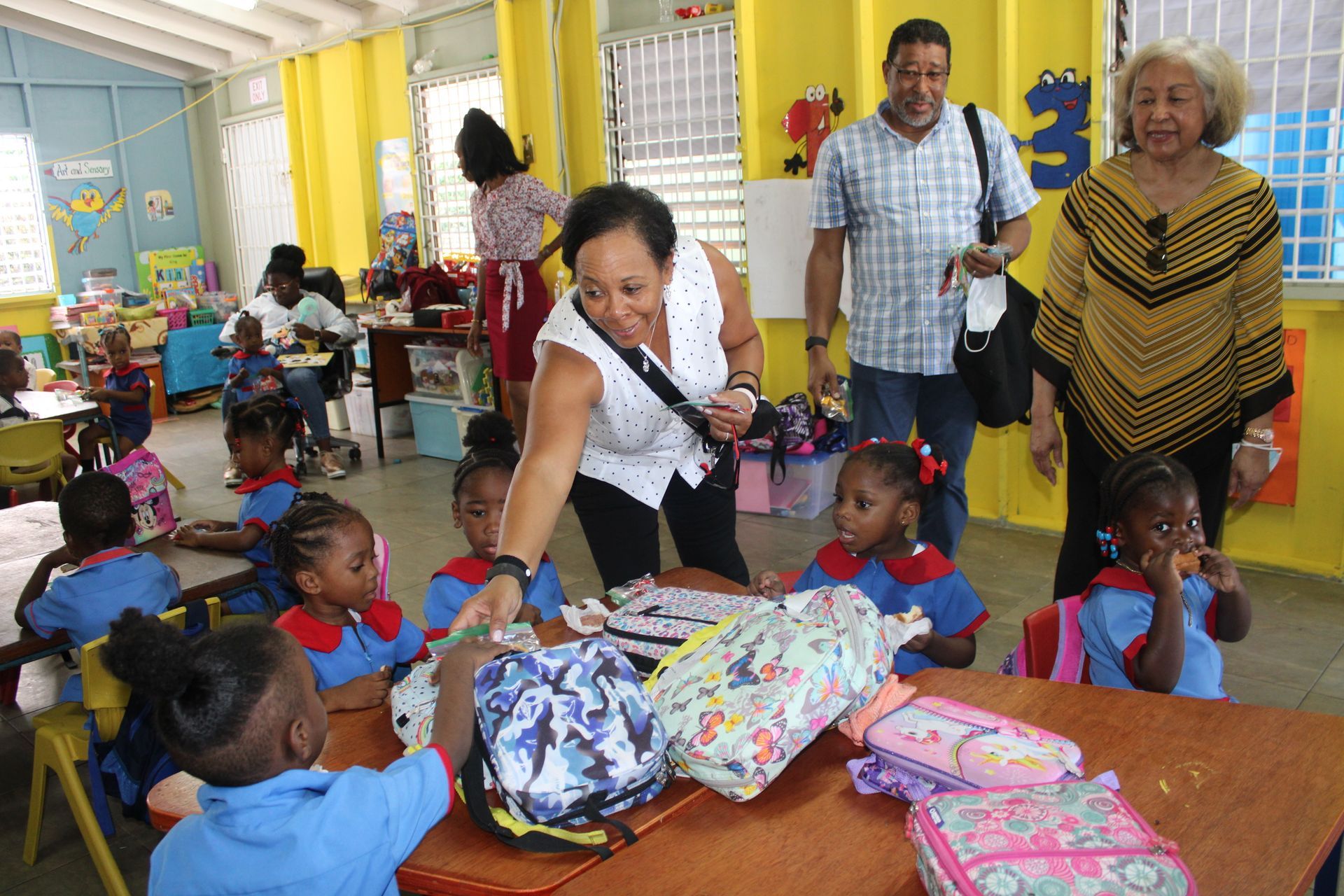
When most people think about a school, they picture classrooms, teachers, textbooks, and students learning new subjects. While education is certainly important, schools in many underserved communities serve a much larger purpose. For families in rural Jamaica, a school is often the foundation that allows an entire community to function. It provides children with a safe place to learn and grow while giving parents the opportunity to work, provide for their families, and contribute to the local economy. In many ways, a school becomes the heartbeat of the community.


A Safe Place for Children

Every parent wants to know their child is safe. In communities where childcare options are limited, schools provide much more than education. They offer structure, supervision, encouragement, and a caring environment where children can spend their day surrounded by trusted adults. For many families, that peace of mind is invaluable. Knowing their children are safe allows parents to focus on earning a living instead of worrying about what may happen while they are away.


Giving Parents the Freedom to Work

One of the greatest challenges facing families in underserved communities is balancing work with caring for young children. If a parent must stay home because there is nowhere safe for their child to go, earning a steady income becomes difficult or even impossible. When a local school is available, that changes everything. Parents can seek employment, maintain jobs, or operate small businesses knowing their children are in a safe and supportive environment. A school doesn't simply educate children—it creates opportunities for parents to provide for their families.


Supporting the Entire Community

The impact extends far beyond individual families. When more parents are able to work, local businesses gain reliable employees. Families have greater financial stability, local commerce continues, and communities become more resilient. Schools become gathering places where relationships are built, hope is strengthened, and neighborhoods grow together. They serve as an anchor that helps communities remain connected during both everyday life and times of hardship.


Investing in Stability Today

It's natural to think about education as an investment in the future. And it certainly is. But schools also address the needs of today. Every school built creates immediate benefits for families who depend on a safe, reliable place for their children during the day. That stability allows parents to work, children to learn in a caring environment, and communities to continue moving forward one day at a time.


A Mission That Strengthens Families

At Christos Ministries, building schools is about more than constructing classrooms. It's about creating spaces where children are cared for, families are supported, and communities are strengthened. Every classroom represents more than desks and books. It represents parents who can go to work with confidence. It represents children who have a safe place to grow. It represents communities with greater stability and hope.


How You Can Make a Difference

Strong communities are built one family at a time. When you support the work of Christos Ministries, you're helping create safe environments where children can learn, parents can work, and entire communities can move toward greater stability. A school is much more than a building. It's a place where hope takes root, families are strengthened, and communities find the support they need to keep moving forward. Because sometimes the most important thing a school provides isn't just an education. It's the opportunity for an entire community to thrive.

By Mervyn Levy July 21, 2026
When people think about schools, they often think about education—teachers, classrooms, homework, and preparing children for the future. While those things are certainly important, there is another role that schools play that many people never consider. For many families in underserved communities, a school is what makes it possible for parents to go to work. Without a safe place for children to spend the day, earning a living becomes incredibly difficult. A school isn't just a place for learning—it becomes part of the foundation that keeps families and entire communities moving forward. A Day Without a School Imagine waking up before sunrise, preparing for another day of work. You have a job waiting for you. Your family depends on the income. But there's one problem. Your children have nowhere safe to go. There are no affordable childcare options. No trusted family member nearby. No school where they can spend the day learning and being cared for. Now you're faced with an impossible choice. Do you leave your children unattended? Or do you stay home and lose the income your family desperately needs? For many parents, the answer isn't really a choice at all. They stay home. The paycheck disappears. Groceries become harder to afford. Bills begin to pile up. One missed day of work can quickly become several, placing tremendous strain on the entire household. One School Changes Everything Now imagine the same morning with one important difference. Your children get ready for school. They walk through the doors of a safe, caring environment where they are welcomed by teachers who know them and encourage them. Instead of worrying all day, you head to work knowing your children are protected, supported, and learning. You earn the income your family depends on. Your employer has a reliable worker. Your children spend the day in a place designed to help them grow. That single school has changed the direction of the entire day—not only for one child, but for an entire family. Schools Support Working Families Schools provide much more than education. They provide stability. When parents know their children have a safe place to spend the day, they can focus on building a better life for their families through honest work. This creates a ripple effect throughout the community. Parents remain employed. Businesses have dependable workers. Families have greater financial stability. Children grow up in a consistent, caring environment. Communities become stronger because families have the support they need to move forward together. More Than Classrooms It's easy to see a school as simply another building. But in many communities, it represents something much greater. It represents opportunity. It represents security. It represents hope. Every classroom allows parents to pursue meaningful work while knowing their children are being cared for. Every teacher provides encouragement that extends beyond academics. Every school day helps strengthen not only children, but the families who love them. Building Stronger Communities in Jamaica At Christos Ministries, building schools in Jamaica is about more than constructing classrooms. It's about strengthening families. When children have a safe place to learn and grow, parents have the freedom to work and provide for their households. That simple reality creates stability that benefits the entire community. Each school becomes a place where children are nurtured, parents are supported, and communities can continue moving forward together. You Can Help Keep Hope Alive Sometimes the most meaningful acts of generosity aren't the ones people notice first. A school may look like a building made of concrete, desks, and books. But for the families who rely on it every day, it represents something far more valuable. It means a parent can go to work. It means a child has a safe place to belong. It means a family has one less impossible decision to make. When you support Christos Ministries, you're helping create places where children are cared for, parents are empowered to earn a living, and communities gain the stability they need to thrive. Because sometimes, the most important thing a school provides isn't just an education. It's the opportunity for families to move forward—one day, one child, and one community at a time.
By Thomas Minieri December 8, 2025
Tucked away in a community once plagued by violence and crime, Glendevon Primary & Infant School in St. James, Jamaica, is quietly rewriting its narrative. Amid challenging social circumstances, the school’s recent academic and community-driven successes signal not only resilience — but a powerful model for what education can achieve even “against the odds.” A Sweep in Maths: Demonstrating Academic Transformation In September 2025, Glendevon Primary made headlines after dominating the Inter‑Ministerial School Support Strategy (ISSS) Mathematics Competition. The school clinched both regional and national titles, sweeping awards across lower primary (grades 1–3) and upper primary (grades 4–6). By the end of the competition, they walked away with six trophies and a suite of math-related gadgets. During a proud ceremony, Principal Audrey Lee‑Peynado highlighted one striking detail: of the eight students who competed, six were boys. This underscores a growing — and commendable — engagement with mathematics among boys at the school. Many are part of the school’s “Maths Club,” and their performance suggests they’re not just participating — they’re excelling. One of the former participants also secured a government scholarship and now studies at Herbert Morrison Technical High School, thanks to an outstanding performance on the Primary Exit Profile (PEP) exam. The mathematics competition itself is part of a broader effort for schools within the “Zones of Special Operations” (ZOSO), an initiative aimed at helping communities recover from social ills — such as violence — by leveraging education and youth engagement. Glendevon Primary sits in Region Four, one of the ZOSO zones. The Role of ISSS: More Than a Competition — Community Rebuild in Action Glendevon Primary’s success didn’t emerge in a vacuum; much of it stems from its involvement with ISSS, a program that began supporting the school in 2021 under the government’s broader Citizen Security Plan. The strategy includes a broad array of supports: literacy training for teachers, restorative-justice programs, psychosocial support for students and parents, and guidance through violence-prevention workshops. The school benefits not only academically, but holistically. Through behavioral programmes, youth at risk are identified and offered structured, positive outlets: for instance, girls trained in taekwondo, boys in football camps, and support for students’ physical health, like mass eye-tests — part of a joint effort with the Canadian government. Lee-Peynado described the school’s philosophy as a “triangle” — underscoring that real transformation requires the combined efforts of the school, parents, and the wider community. It’s an inclusive model, working to rebuild not just academic proficiency, but social trust, discipline, and community cohesion. From Struggle to Success: Rising Academic Performance Prior to its involvement with ISSS, Glendevon Primary struggled academically. Their performance on the PEP exam hovered below the national average — with only around 59% of students meeting the expected standard. Since those early years, however, the school has made marked progress. For the past two years, it has consistently surpassed the national average of 70%. This shift speaks volumes — not just about curriculum or instruction, but about a broader transformation in school culture, community involvement, and student confidence. Parents, too, are responding. School governance and student success have become points of pride. According to the principal, parents now come in more often, follow up on their children’s progress, and — crucially — feel a sense of ownership. The community “buzzes with joy,” she said. Why the Story of Glendevon Matters Glendevon Primary's journey holds broader significance beyond its own gates: Education as a lever for social change — Through ISSS, Glendevon demonstrates how focused educational support can build resilience even in communities long affected by violence and poverty. Holistic support beyond academics — The mix of restorative justice, wellness programs, sporting and extracurricular opportunities, community engagement, and parental empowerment shows success isn’t just about test scores. Inclusive growth and equity — That the school saw increased engagement from boys — traditionally harder to retain in academic interventions — underlines the importance of designing programs with equity in mind. The power of partnerships — No single actor — not the school, not the government — can drive progress alone. Glendevon’s story shows what’s possible when school, community, parents, and broader initiatives align around a shared vision. Looking Ahead: A Model Worth Replicating As the school continues to ride this momentum, Principal Lee-Peynado is optimistic. With the support of ISSS and buy-in from parents and community members, she envisions even stronger performance in years to come. The motto, “Achieving Excellence Together,” isn’t just a slogan — it’s a blueprint. For policymakers, educators, and community leaders across Jamaica — especially in communities under ZOSO — Glendevon’s model offers a promising road map. Investing not just in teaching, but in the broader ecosystem around students: their families, their mental health, their extracurricular opportunities, and their sense of belonging — that’s how to turn “underprivileged” into “undefeated.” At a time when many schools struggle with limited resources and social instability, Glendevon Primary shines as proof that with support, structure, and community partnership, transformation is possible SOURCE: Jamaica Observer
More Posts