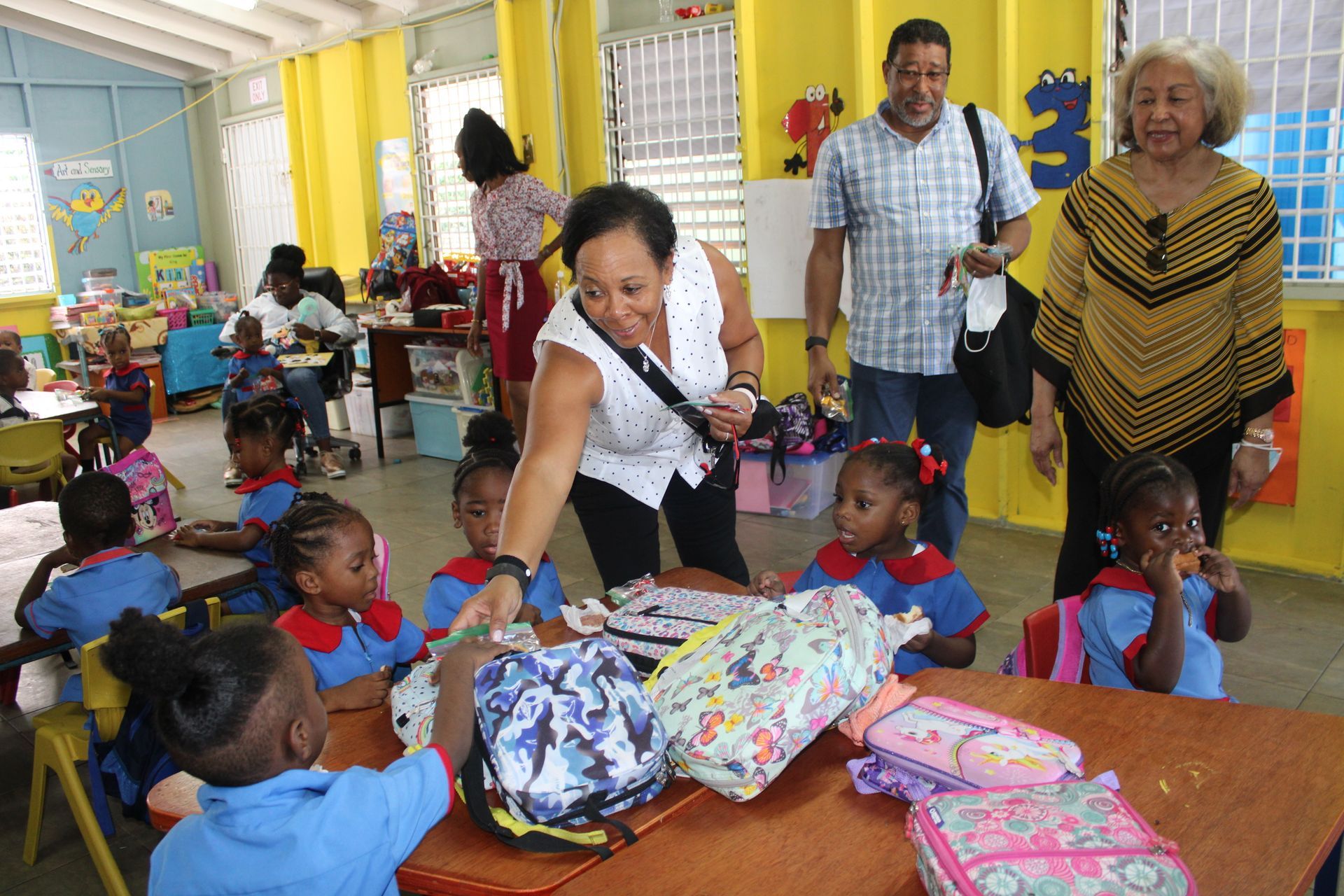
Why a School Is More Than a School: The Ripple Effect Across a Jamaican Community
How do schools help communities? In Jamaica, a functioning school can do far more than provide a place for academic instruction. It can give children a safe, structured environment to learn, help families maintain reliable daily routines, support parents as they work, and become a lasting community asset. That is why investing in education and school infrastructure can create a ripple effect that reaches far beyond the classroom. At Christos Ministries, we believe a school is more than a school. It is one of the places where faith, generosity, infrastructure, and opportunity can come together to strengthen a community for years to come.
How Do Schools Help Communities in Jamaica?
A reliable school gives children something essential: a consistent place to learn, grow, build relationships, and prepare for what comes next. UNICEF Jamaica emphasizes the importance of safe, inclusive and resilient education environments as part of improving educational opportunity for Jamaican children.
But the impact does not necessarily stop with the student. A dependable school day can also help create predictable routines for a family. When parents know their children have a safe place to learn, they may have greater freedom to maintain employment and manage household responsibilities. Over time, that stability can strengthen the wider community as well.
What Happens When a School Cannot Function?
When a school is damaged, overcrowded, unsafe, or missing essential resources, the problem extends beyond academics. Children can lose learning time and structure, while families must adjust work, transportation, childcare, and daily routines.
Jamaica saw this clearly following Hurricane Melissa in 2025. UNICEF reported that the storm disrupted schooling at more than 600 schools, while school communities became important parts of the recovery response—helping connect families with meals, supplies, support, and temporary learning spaces.
A functioning school is therefore not simply a building where lessons happen. It can be part of the infrastructure that helps everyday community life keep moving.
What Does School Infrastructure Make Possible?
Infrastructure becomes meaningful when we look at what people can actually do with it. At Glendevon Primary and Infant School in St. James, Jamaica, Christos Ministries helped provide a facility that includes classrooms, a computer lab, kitchen and dining facilities, offices, a sick bay, restrooms, showers, and a play area. The completed project serves 130 children.
Each element serves a practical purpose. A classroom becomes a place to learn. A computer lab expands access to technology. Sanitation facilities support health and dignity. A kitchen helps a school meet everyday needs. A playground gives children room to move, play, and develop.
This is what practical generosity can become.
How Does a School Create a Ripple Effect?
The ripple begins with a child, but it can move outward. A safe classroom supports learning and belonging. A reliable school can support a family's daily routine. A completed facility becomes an asset educators and local communities can use year after year. And a student who gains greater educational opportunity may carry that opportunity into adulthood, into a family, and eventually into another generation.
That is the deeper connection between education and community development in Jamaica. Buildings alone do not transform communities. People do. But good infrastructure can give children, educators, families, and local leaders a stronger foundation from which to do that work.
How Can Donors Help Build Something That Lasts?
Christian stewardship is ultimately about putting love into action. Christos Ministries was founded on the idea that people can pool their resources around a shared purpose and create something larger and more enduring than any single gift.
Your generosity can become something real: a classroom, a roof, safe bathrooms, clean water, computers, desks, a playground, or a place where a child can learn with dignity. And because a functioning school can support families and strengthen the fabric of a community, that gift may continue creating value long after the construction work is finished.
You are not simply funding four walls. You are helping build a foundation people can use, care for, and build upon for generations. Donate to Christos Ministries and help build hope, opportunity, and stronger communities.
Frequently Asked Questions
How do schools help strengthen communities in Jamaica?
A functioning school can support much more than a child’s education. It provides a safe, structured place to learn while also helping families maintain reliable routines. When children have dependable access to school, parents may have greater freedom to work, households gain stability, and the school itself can become a lasting community asset.
Why is school infrastructure important for children and families?
School infrastructure makes education possible in practical ways. Classrooms, roofs, sanitation systems, clean water, desks, technology, kitchens, and play areas create the conditions children and teachers need each day. A reliable school can also support family routines and remain useful to a community year after year.
How can donating to Christos Ministries create long-term impact?
A donation to Christos Ministries can help fund tangible needs such as classrooms, school facilities, equipment, sanitation, technology, and educational support. The goal is to turn generosity into something useful and lasting—an environment where children can learn, families can move forward, and communities have infrastructure they can rely on for years to come.
How can I support school rebuilding projects in Jamaica?
You can support Christos Ministries through donations that help turn practical needs into tangible results—such as classrooms, safer facilities, sanitation, equipment, and educational opportunities. The goal is for generosity to become something visible, useful, and lasting for children, families, and communities.